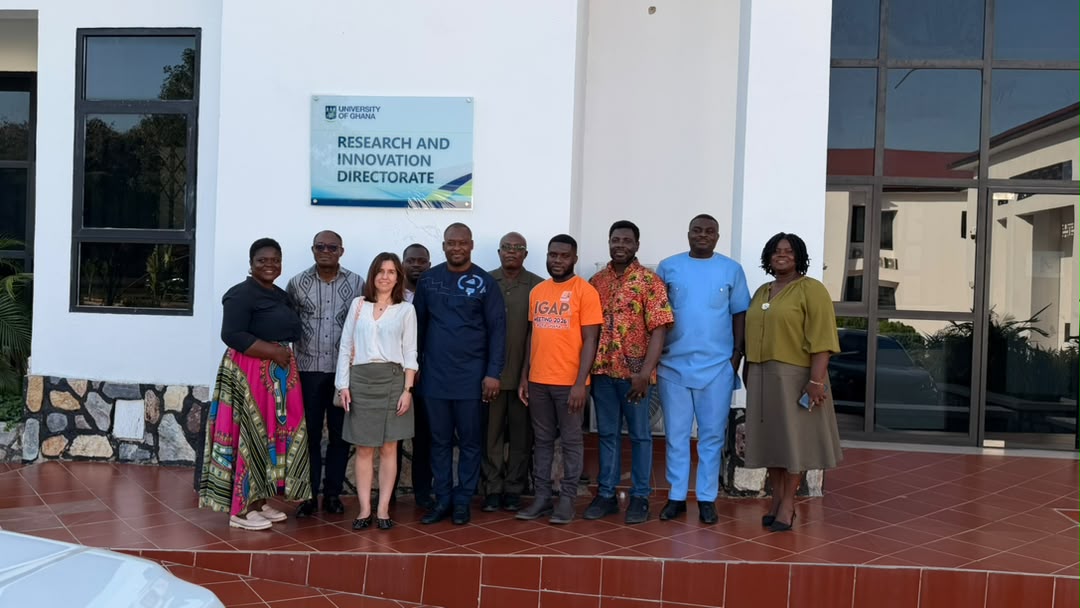
The University of Ghana’s Research and Innovation Directorate (RID) hosted a monitoring and review meeting with a representative of the European Education and Culture Executive Agency (EACEA) on Friday, 13 November 2026, to assess the implementation of European Union-funded academic mobility projects involving the University.
The meeting brought together project coordinators, principal investigators and members of the University’s research community to review achievements, examine implementation challenges and explore opportunities to strengthen collaboration among African higher education institutions.
The visiting EACEA representative, Ms. Elif Memis Marsman, engaged the project teams as part of the Agency’s monitoring activities under the EU-funded Intra-Africa Academic Mobility Scheme.
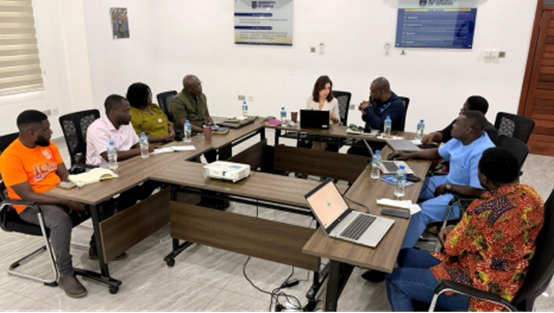
Representatives of the University and EACEA at RID.
The Intra-Africa Academic Mobility Scheme supports partnerships among African universities through postgraduate training, research exchanges, staff mobility and institutional capacity development. It aims to strengthen academic cooperation, improve the quality of higher education and facilitate knowledge exchange across the continent.
During the meeting, project representatives provided updates on their initiatives, including scholarship implementation, student recruitment, research activities and partnerships with participating institutions.
Among the initiatives discussed was the Research and Academic Mobility for Drug Design and Discovery in Africa (RAMDDA) project, which promotes postgraduate research and academic exchanges in drug discovery. Discussions highlighted opportunities for master’s and doctoral students to conduct research at partner institutions and access specialised expertise and facilities.
Participants also discussed a health sciences-related mobility initiative identified in the meeting notes as BRAINS, with attention to postgraduate training and collaborative research.
Project coordinators share updates.
Participants follow a presentation.
Another initiative highlighted was Climate Research and Education to Advancing Green Development in Africa (CREATE-GreenAfrica), an EU-supported project involving the University of Ghana and other African partner institutions. The initiative seeks to strengthen research and academic training in climate change adaptation, mitigation and green development.
Its activities include postgraduate scholarship opportunities, short-term research exchanges, traineeships and staff mobility, with a focus on building expertise to address environmental and sustainability challenges.
A significant part of the engagement focused on practical implementation challenges. Project teams discussed scholarship recruitment, eligibility requirements, administrative delays, institutional coordination and financial management. They stressed the need for clear communication among coordinators, host institutions and scholarship beneficiaries.
The discussions offered an opportunity to examine experiences from previous application rounds and identify ways to improve project delivery and ensure effective use of available mobility opportunities.
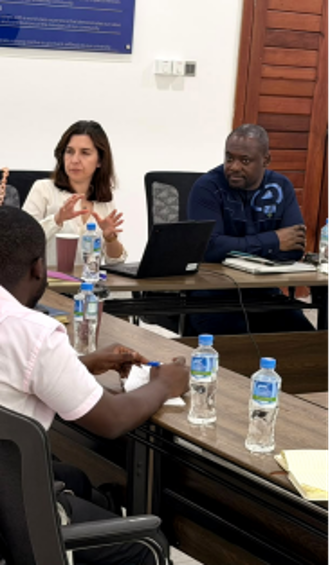
Discussion on project outcomes.
Ms. Marsman highlighted the value of effective project implementation, institutional collaboration and lessons from ongoing projects. The discussions also touched on project monitoring, the timely resolution of implementation difficulties and the need to ensure measurable benefits for scholars and participating institutions.
The engagement further provided an opportunity to consider future funding prospects and ways in which Ghanaian universities could deepen their involvement in EU-supported academic and research partnerships.
The visit underscored the University of Ghana’s commitment to strengthening postgraduate education, research capacity, knowledge exchange and institutional cooperation through its participation in African and international mobility initiatives.