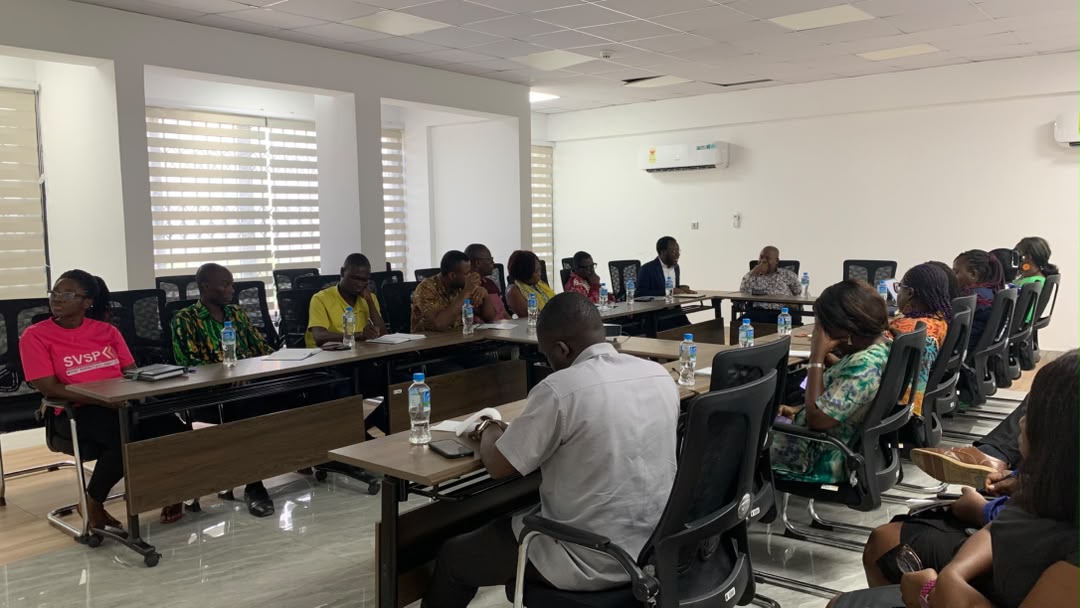
The Pro Vice-Chancellor for Research, Innovation and Development (RID), Professor Samuel Nii Ardey Codjoe, convened a meeting between staff of the Research and Innovation Directorate (RID) and the University’s Enterprise Resource Planning (ERP) development team on Friday, 6 November 2026, at the RID Conference Room.
The meeting formed part of ongoing engagements with stakeholders to ensure that the University's new ERP system addresses the operational needs of its various units and directorates.
The University is developing a customised ERP system to integrate its administrative and operational processes, improve efficiency and strengthen service delivery. The project, led by Dr. Elvin Ansah, Lead Consultant, involves the development of several modules tailored to the University's specific requirements.
In his remarks, the Pro Vice-Chancellor explained that the Office of the Pro Vice-Chancellor (RID) was playing a leading role in mobilising resources and supporting the successful implementation of the project. He noted that the development process was being approached strategically, with priority given to units requiring urgent technological interventions.
He emphasised the importance of developing a system that would address existing operational challenges, streamline administrative procedures and improve efficiency across the University.
Addressing staff, Dr. Ansah explained that the new ERP was being developed from the ground up rather than adopting an existing system and modifying it to suit the University's needs. This approach, he indicated, would allow the development team to design solutions that respond directly to the University's operational requirements.
He acknowledged that engagement with RID should ideally have commenced earlier, given the Directorate's role in supporting the project, and assured staff that their requirements would be incorporated into the development process.
Dr. Ansah further emphasised the importance of continuous stakeholder engagement, explaining that the development team would remain available to provide technical support and make necessary improvements even after implementation.
He expressed confidence in the team's technical expertise and capacity to deliver a system that meets international standards.
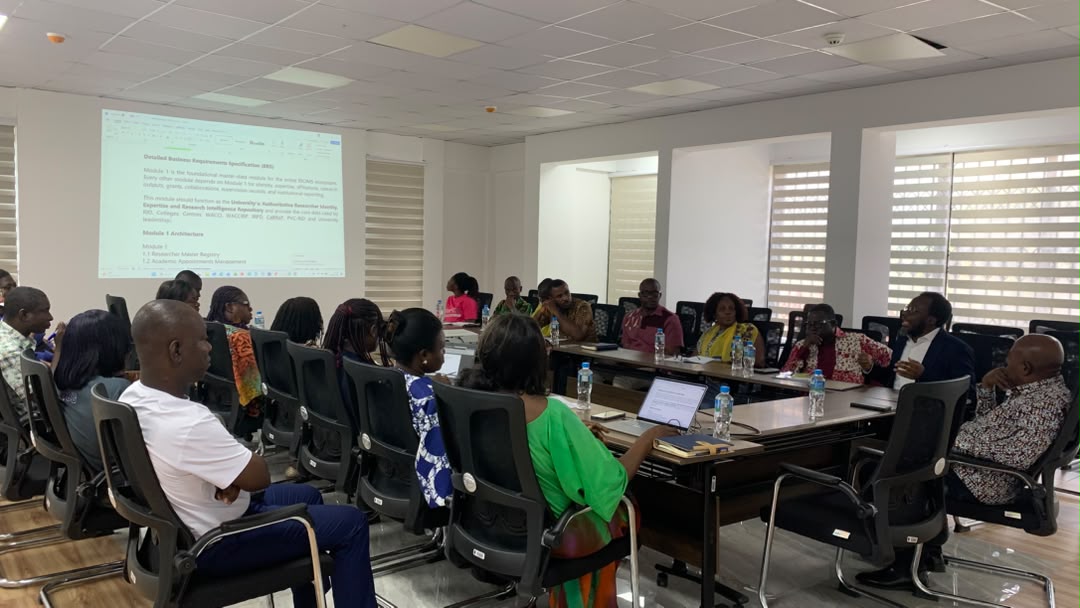
During the discussions, the Deputy Director for Research, Professor Nancy O. Quarshie, outlined some of the Directorate's operational requirements, particularly in research and grants management.
She highlighted the need for a comprehensive database of University researchers, including their respective areas of expertise, to facilitate effective research administration and communication.
Such a database would enable the Directorate to identify researchers working in specific disciplines and ensure that relevant funding opportunities and grant calls are communicated directly to them.
The discussions also touched on the need to incorporate internal grants management processes into the ERP, improve access to research-related information and reduce the time required to complete routine administrative procedures.
Staff were encouraged to document their existing workflows, operational challenges and system requirements to guide the development of modules relevant to the Directorate.
The engagement provided an opportunity for RID staff to contribute to the design of the new system and ensure that the Directorate's research management functions are adequately represented.
Also present at the meeting was the Deputy Registrar in the Office of the Pro Vice-Chancellor (RID), Mr. Emmanuel Baidoo.
The meeting forms part of the University's broader efforts to modernise its administrative systems through a locally developed, integrated digital platform designed to improve institutional efficiency, coordination and service delivery.