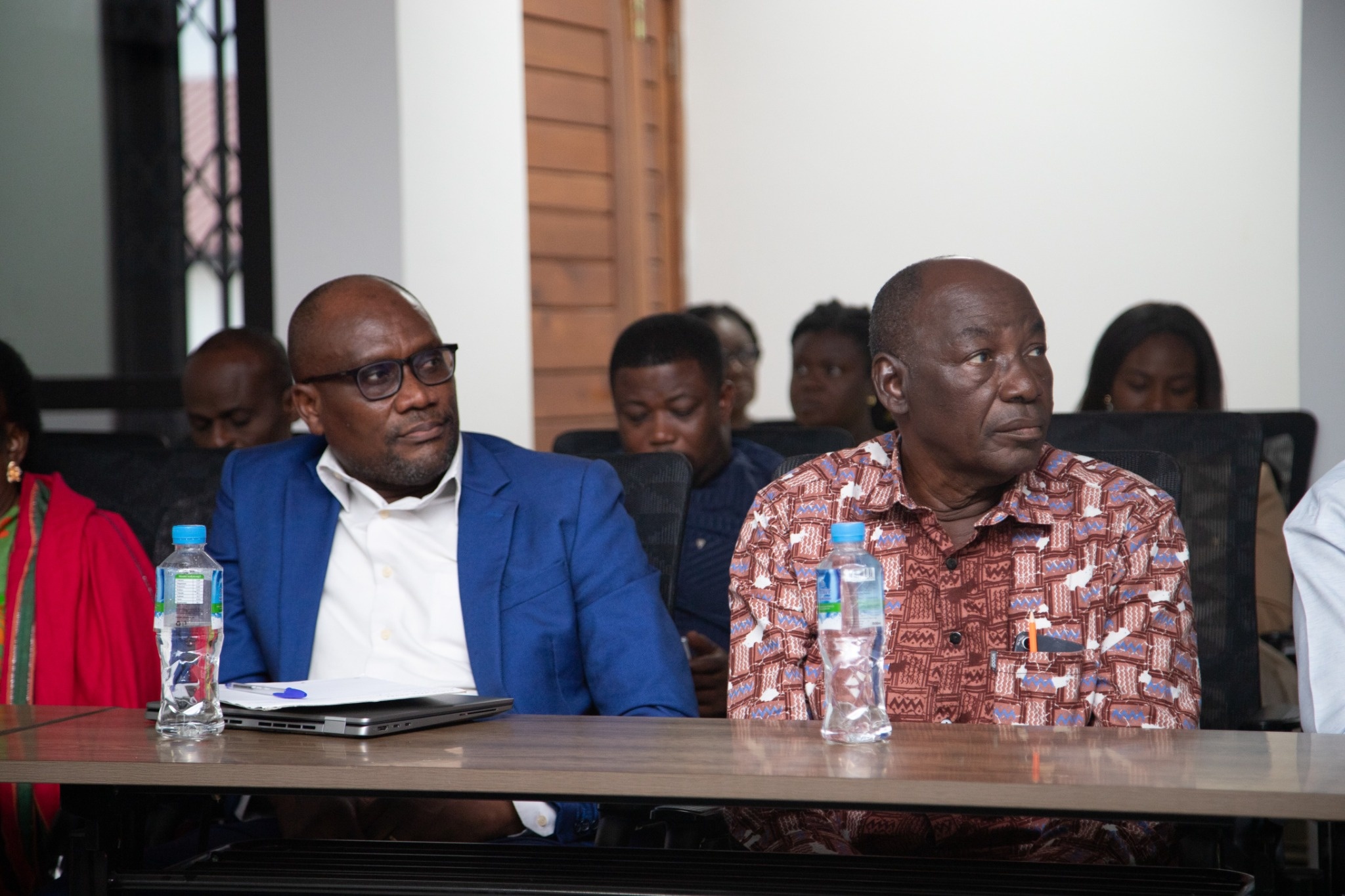
As part of his ongoing engagement with key stakeholders, the Pro Vice-Chancellor for Research, Innovation and Development, Professor Samuel Nii Ardey Codjoe, held a consultative meeting with some Principal Investigators (PIs) to share his vision for research and innovation and solicit ideas on how to increase research funding at the University of Ghana.
Present at the meeting, held on Wednesday, 2nd September 2026, was Prof. David Dodoo-Arhin, Director (RID), Mr Emmanuel Baidoo, Deputy Registrar, and Research Development Officers of RID. Several academics from various colleges and disciplines were also represented.
Prof. Codjoe presented comparable statistics which reveal the critical role that research funding played in the University’s sustainability and the resultant effects on education and institutional ranking. He identified the need for a critical balance between dedicated research careers (i.e. Research Fellows) vis a vis the extent of teaching requirements for lecturers.
Prof. Codjoe shared his view on the evolving global funding environment, highlighting major policy shifts in funding by Governments, and the reliance on private philanthropic foundations. Whilst recognizing the timely interventions by private donors, he noted that their funding was skewed and limited. Recent global events have demonstrated that potential challenges will require substantial funding to address. He noted that UG would benefit from collective efforts at presenting a united front when submitting funding proposals and envisioned the Research and Innovation Directorate taking a lead role in this endeavour to achieve successful outcomes.
To support the University’s focal areas of research as outlined in the strategic plan (2024-2029), Prof. Codjoe announced the set-up of a 10-member multidisciplinary research group for each focal area of research. He stated that RID would facilitate quarterly meetings and retreats as necessary. Part of the group’s task would be to mentor early and mid-career faculty and impart valuable knowledge for continuity of scholarship.
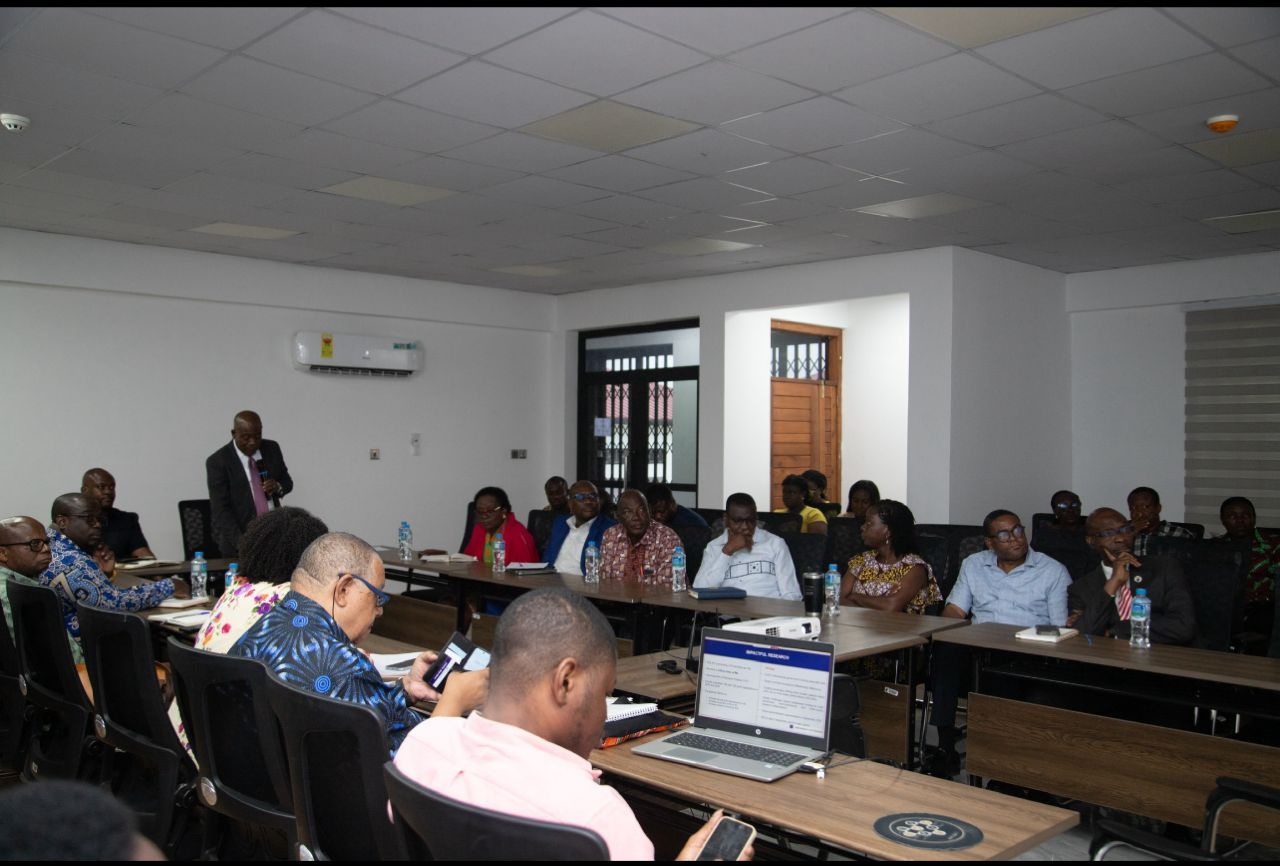
During the presentation, Prof. Codjoe highlighted some areas requiring a review, including ethical clearance, support for research fellows, payments and procurement. He stated the need for a dedicated research site under the UG umbrella and the need to update some data sets to reflect current dynamics.
On ethical clearance, he called for improvements in the turnaround time for ethics reviews and stressed the need for technical and theoretical issues to be assessed by experts in the relevant fields. He also noted the need to establish an Ethics Committee for the College of Education, as the Humanities Ethics Committee currently handles ethics reviews for the College in addition to its existing workload.
The issue of decentralizing ethical clearance was raised by Prof. Amidu of the University of Ghana Business School, who noted that the process could, in some extreme cases, take as long as a year. Prof. Ardey Codjoe explained that there were specific requirements for establishing an Ethics Board, which made decentralization to individual Schools a more complex process.
He also spoke about the University of Ghana Undergraduate Research Experience Programme (UG-UREP), noting the University’s desire to give undergraduate students research experience.
On research fellows, the Pro Vice-Chancellor mentioned that GTEC regulations provide for post-retirement contracts only for teaching staff and said the University should explore arrangements that would also allow research fellows to continue contributing after retirement. He also stressed the importance of providing retired research fellows with institutional support, including office space and IT equipment.
Regarding payments on research grants, Prof. Ardey Codjoe emphasized that monies should not be delayed. He noted that financial transactions are being regularized to ensure easy disbursements, while identifying the signing of physical cheques when the Pro Vice-Chancellor is away as one of the challenges being addressed.
On procurement, he noted that the University had successfully made a case for some projects to use the procurement protocols of their funders and indicated that similar exemptions could be requested for externally funded projects. He also raised the need to consider a Deputy Director of Procurement dedicated to research projects.
The presentation was followed by a round-table discussion, during which PIs raised a range of issues relating to research capacity, data, research administration and support.
Prof. Chris Gordon noted the need for about 30 additional PIs to reach the University’s stated target. He also raised concerns about research data, noting that researchers often start from scratch instead of building on existing datasets from earlier long-term studies.
Participants also pointed to possible overlaps in projects and innovation hub activities involving the University of Ghana Business School, UGEL and the School of Agriculture. In response, the Director of RID, Prof. David Dodoo-Arhin, emphasized the need to harmonize the various hubs without micromanaging their activities, while ensuring that the University presents and reports on its research and innovation activities as one institution. He noted that such coordination would be important as the University seeks to pursue larger funding opportunities.
Staffing and research administration also featured in the discussion, with PIs noting that changes in personnel responsible for budget management could sometimes create uncertainty about responsibility for particular financial matters. Prof. Ardey Codjoe explained that some positions require specialized skills and may therefore require a different approach to staff movements. Prof. Robert Darko Osei, Director of ISSER and former Dean of the School of Graduate Studies, called for continued engagement on the University’s wholesale transfer policy, noting the need to balance the policy with the importance of specialization and institutional expertise.
The remuneration of research workers, particularly in international collaborations, was also discussed. Prof. Ardey Codjoe indicated that independent negotiations could sometimes better reflect the value of specialized research personnel, while Prof. Quashie noted that the WACCBIP salary structure, which dates from 2020 and covers positions from research assistants upwards, requires review and could potentially inform a broader University framework.
The Head of the Grants Management and Research Support Unit, together with other Unit Heads who briefly introduced their respective roles, highlighted the support available to PIs, including the involvement of Research Development Officers (RDOs) from the early stages of grant applications. It was noted that RDOs are now stationed at the various Colleges, with arrangements in place for grants to be managed either at the College or central level, depending on the grant value and funder requirements. Mr. Jacob Zuttah also indicated that RID maintains a repository of faculty research areas and works, which can be made available to PIs upon request. The discussions also touched on research personnel, intellectual property and commercialization, with participants emphasizing the importance of involving IP officials in research projects at an early stage.
The meeting ended with a tour of research and innovation units where PIs were introduced to the roles of each unit in supporting research and innovation.