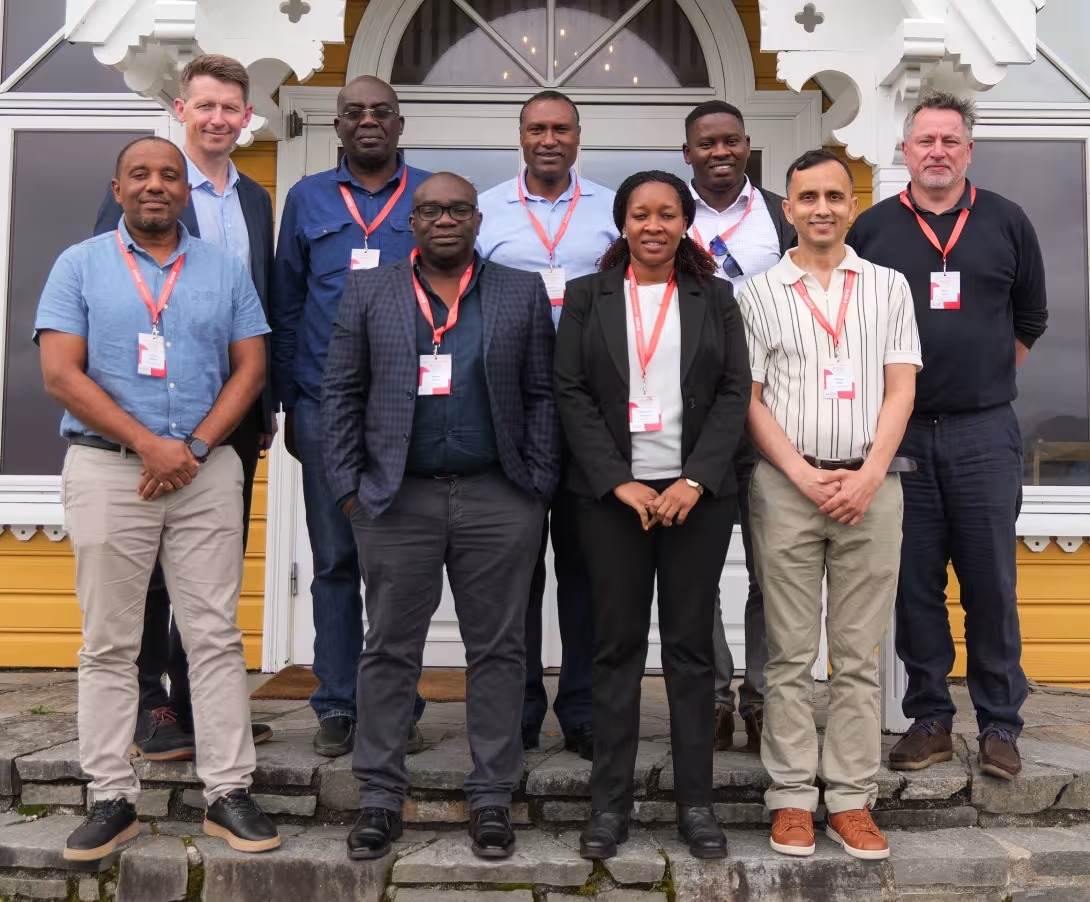
On 26 February 2026, the University of Ghana reaffirmed its leadership in global health research through its central role in a major international collaboration aimed at strengthening fair and evidence-based decision-making on the path to Universal Health Coverage in low- and middle-income countries.
The five-year project, Fair Choices on the Path to UHC in Times of Change (2026–2030), has received NOK 129 million (approximately USD 13.5 million) in funding from the Norwegian Agency for Development Cooperation (Norad). The initiative is globally led by Kjell Arne Johansson of the Bergen Centre for Ethics and Priority Setting in Health at the University of Bergen in Norway.
The University of Ghana’s participation reflects its vision of achieving global impact through impactful research, strategic engagement and partnerships, and sustainable research mobilisation. Through this collaboration, the University is contributing policy-relevant evidence to address one of the most pressing challenges in global health—how countries can set fair and effective health priorities in the face of shrinking development aid and increasing health needs.
The project spans several countries, including Ghana, Tanzania, Nepal and Ethiopia, with the University of Ghana leading implementation in Ghana. The Ghana component is being carried out in partnership with the Ministry of Health Ghana, the Ghana Health Service and the National Health Insurance Authority Ghana, with a project secretariat hosted at the University of Ghana School of Public Health.
Under this arrangement, the University will support national institutions in strengthening health priority-setting processes by providing context-specific, evidence-based analysis to guide policy decisions. The initiative aims to enhance the legitimacy, effectiveness, efficiency and fairness of health policy choices, particularly within constrained public health budgets.
The Ghana component of the project is led by Kwasi Torpey, Dean of the School of Public Health and Country Lead and Principal Investigator. He works alongside Genevieve Aryeetey, Leonard Baatiema and Richmond Owusu, all of the School of Public Health.
The University brings multidisciplinary expertise to the collaboration, drawing on strengths in public health, global health leadership, health systems research, health financing, health policy and health economics. This breadth of expertise positions the institution to contribute meaningfully to both the technical and ethical dimensions of health priority setting.
To promote evidence uptake, the project has established a Steering Committee and a Technical Working Group with representation from senior leadership at the University of Ghana and partner institutions in the national health sector. These structures will facilitate dialogue between researchers and policymakers and support the translation of research findings into actionable policy decisions.
Globally, the initiative seeks to support countries as they navigate demographic transitions and reductions in donor funding. By advancing economic evaluation, applied ethics, inclusive deliberation and locally developed value frameworks, the project aims to help governments allocate limited health resources more efficiently while upholding principles of fairness and equity.
Through this collaboration, the University of Ghana continues to strengthen its role as a key contributor to global health research and policy while supporting national and regional development through evidence-informed decision-making.