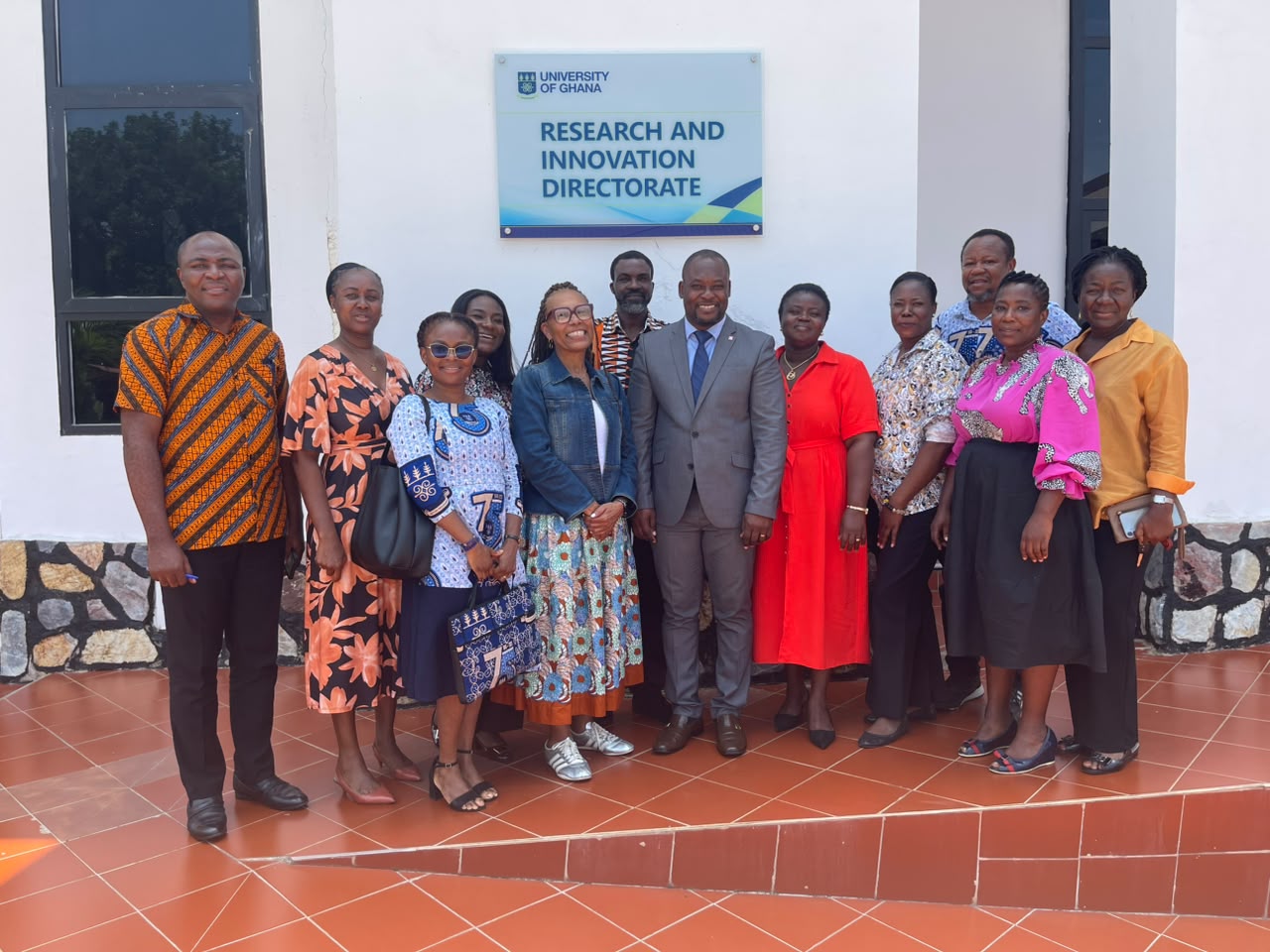
The Research and Innovation Directorate (RID) held a capacity building seminar organized by Capacity Building and Research Performance (CaB-ReP) Unit, to help researchers and research managers/administrators (RMAs) navigate the boundaries to achieve funding success.
The resource person for the training session, held on Wednesday 9th September 2026, was Ms Rosemary Madnick, Vice President (Research Administration) of the Lundquist Institution for Biomedical Innovation (USA). Her presentation focused on breaking down barriers to funding and practical strategies to improve researcher and research manager collaboration.
Mrs Amma Appah, Research Development Officer (CaB-ReP) who introduced Ms Madnick highlighted her towering role in capacity building at the National Council of University Research Administrators (NCURA). She noted the importance of networking, acknowledging that Mrs Sakyibea Biney’s (Head, Grants Management) affiliation with Ms Madnick at NCURA had led to her willingness to hold the seminar during a private visit to Accra. She expressed immense gratitude for her willingness to share knowledge.
Acknowledging participants present and others who joined online, the Director (RID), Prof. David Dodoo-Arhin, extending a warm welcome to Ms Madnick recalling past research affiliations. He noted that building lasting networks complements collaboration and imparts knowledge. Prof. Dodoo-Arhin highlighted the value of sharing experiences and gaining insights from collaborators to adopt best practice. He entreated participants to engage constructively to gain optimum benefit from discussions.
At the start of her presentation Ms Madnick spoke about evolving dynamics of the funding landscape in the United States and the added burden of compliance with new regulations. She noted that the field of research and research administration required collaboration to thrive, stating that “in this field you don’t do it alone”. The first part of the presentation was titled “Funding Without Frontiers: Working with Foreign Sponsors and Partners”. The second session was on; “Connecting Minds: Building Stronger Researcher and Research Manager/Administrator (RMA) Relationships
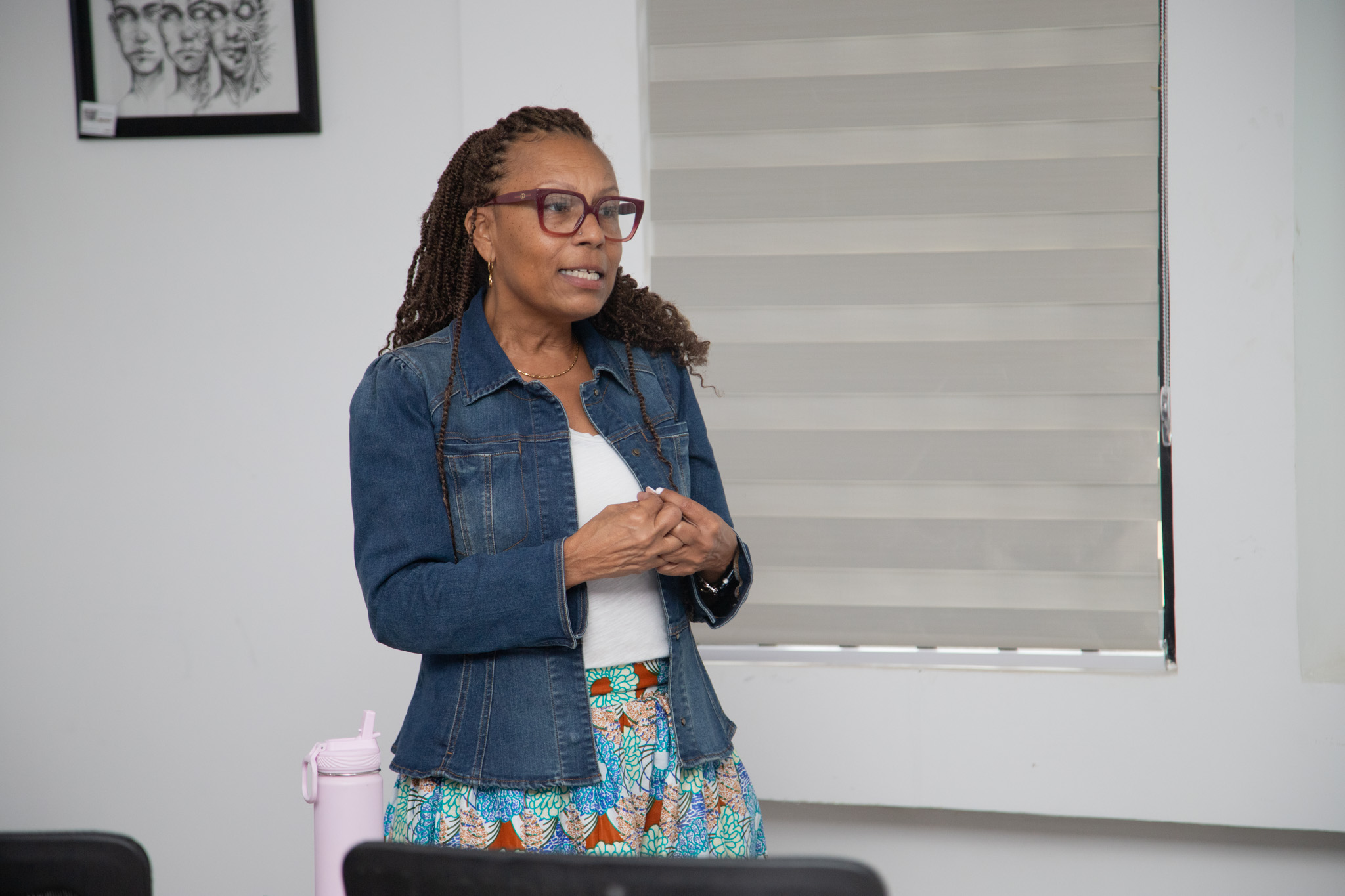
She presented different approaches and scenarios for negotiation and relationship building with foreign sponsors and partners and offered strategies for achieving positive outcomes in securing research funding. She explained that the foundation of research success was based on collaboration and innovation.
In her preamble, Ms Madnick noted that the role of research managers falls into a ‘grey’ area of research funding and research outcomes; the role of research administration, she believes, is not as visible compared to that of a scientist or a funder. Referring to research as prolific, she suggests that research managers fit into the role of “creative problem solvers”, working around red tape to enable “researchers focus on the science”.
Research Development Officers discussed common challenges that impeded work processes; the uphill task of delivering outcomes preferred by scientists, but do not meet a funder’s requirements. Other areas discussed include the late submission of proposal and establishing qualifying criteria for funding applicants.
Ms Madnick shared her strategies on how to illicit timely responses from researchers, who she acknowledges are busy with “the science”. She recommended paying visits to researchers outside proposal submission interactions, to seek feedback and for familiarization. She advised administrators not to allow perceived power imbalances and differing priorities to stifle the success which would ultimately inure to the benefit of all.
Following insightful discussions and shared experiences, the seminar ended at 12 noon with a message of gratitude to all for the valuable insights shared.